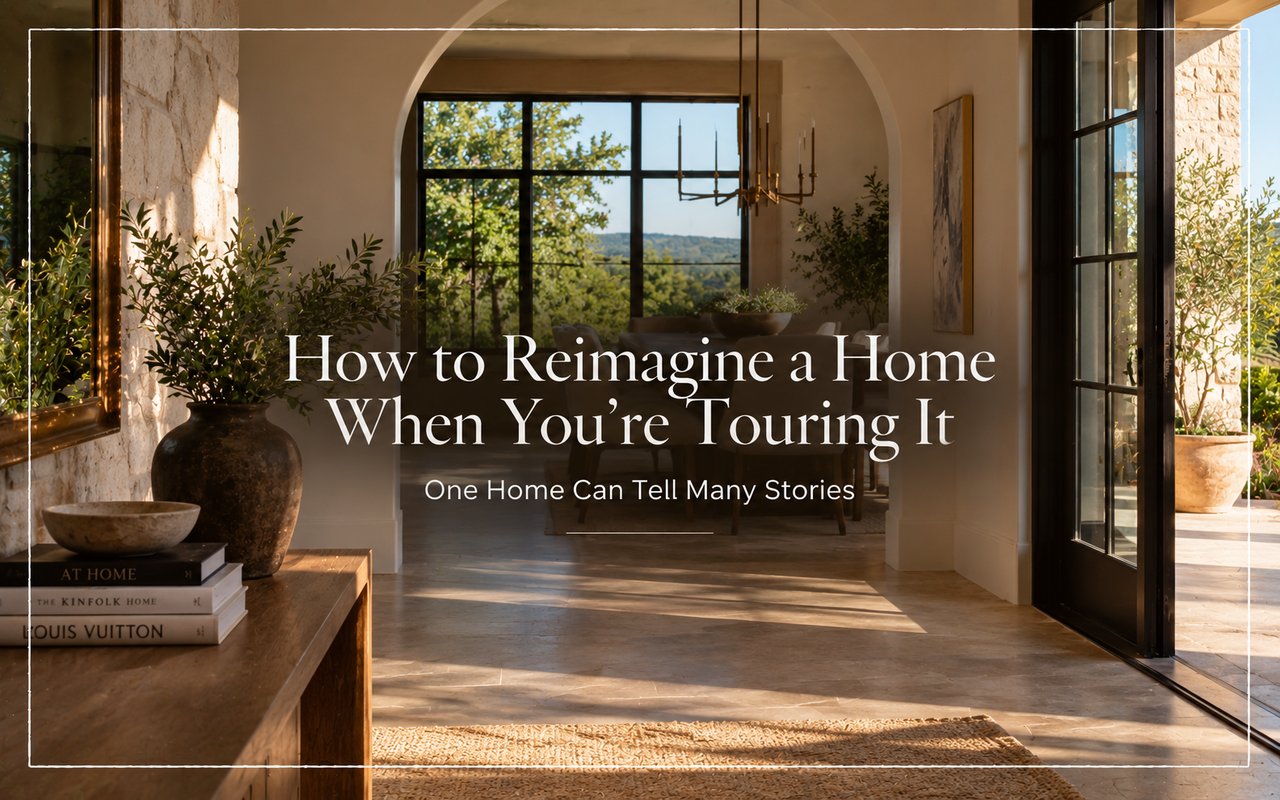
How to Reimagine a Home When You're Touring It
KHANI ZULU | BROKER ASSOCIATE, MCNE, CLHMS | September 8, 2026
Buyer Education
KHANI ZULU | BROKER ASSOCIATE, MCNE, CLHMS | September 8, 2026
Buyer Education
Walking into a beautifully designed home can make an immediate impression.
You notice the architecture. The finishes. The furniture. The artwork. The way every room seems to have been arranged with intention.
But there's another question worth asking when you're touring a home:
What could this space become for me?
Because the way a home is presented today isn't necessarily the way you'll live in it tomorrow.
A beautifully styled dining room might become the place where your family gathers every Sunday. A quiet bedroom could become a home office. A formal living room might turn into a library, a creative studio, or simply the room where you finally slow down.
The most important thing isn't always what you're seeing.
It's what you can imagine.
Staging is designed to help you understand scale, proportion, and possibility. But it can also make it easy to assume that every room has only one purpose.
It doesn't.
When touring a home, try to separate the current presentation from the actual structure of the space.
Look at the natural light.
Pay attention to how rooms connect.
Notice where people naturally move through the home.
Think about which spaces feel inviting and which ones could serve a completely different purpose.
You're not trying to redesign the property during the showing. You're simply giving yourself permission to imagine it differently.
The first question is the simplest:
How would I actually live here?
Think about your everyday routines rather than the way the home looks in photographs.
Where would you have your morning coffee? Where would you read at the end of the day? Which outdoor space would you actually use? Where would your family naturally gather?
Sometimes a home's most valuable spaces aren't the most formal ones.
They're the spaces that make everyday life easier and more enjoyable.
A home also has a social life.
Some people love hosting long dinners around a table. Others prefer casual evenings in the kitchen, drinks outside, or a house full of friends moving naturally from room to room.
As you walk through a property, consider how the spaces could support the way you like to spend time with people.
A large kitchen may become the heart of the home.
An open living area may make entertaining effortless.
A covered terrace may become the place everyone gravitates toward once the weather turns beautiful.
The question isn't whether the home is designed for entertaining. It's whether it could support the way you entertain.
Not every room needs to have a traditional purpose.
For one person, an extra bedroom might be a guest suite.
For another, it could become a private office, studio, library, or creative space.
That's particularly relevant for buyers whose work and personal lives have become more flexible.
When touring a home, look for spaces that could adapt as your needs change.
A room doesn't have to tell you exactly what it is.
Sometimes its greatest value is the fact that you get to decide.
Hospitality is another way to think about a home's potential.
Imagine having friends or family stay for a weekend.
Where would they arrive?
Where would they spend time?
Would guests have privacy?
Could everyone gather comfortably without the home feeling crowded?
These questions can reveal qualities that aren't always obvious on a floor plan.
A home that works beautifully for hosting doesn't necessarily need to be enormous.
It simply needs to have spaces that connect well and allow people to feel comfortable.
Perhaps the most important part of touring a home is thinking beyond the present.
Your lifestyle may look different five years from now.
Your family may grow.
Your work may change.
You may entertain more often or decide you want considerably less space.
The right home doesn't have to perfectly match your life today. It should have enough flexibility to evolve with you.
That's one of the reasons thoughtful buyers pay attention to more than finishes and square footage. They're looking at the possibilities hidden within the property.
Reimagining a home isn't necessarily about knocking down walls or starting a major renovation.
Sometimes it's much simpler.
It's about seeing a room without the furniture that's currently inside it.
Seeing an outdoor space as part of your everyday routine.
Seeing an underused room as an opportunity.
Seeing the home not as someone else's finished story, but as the beginning of your own.
Every person lives differently.
That's what makes finding a home so personal.
The same architecture can support completely different routines, relationships, traditions, and memories depending on the people who live there.
So the next time you walk through a home, don't only ask whether you like what you see.
Ask yourself:
Could I see my life happening here?
Because sometimes the most compelling property isn't the one that looks exactly like your life today.
It's the one that gives you room to imagine what comes next.
With Gratitude,
Khani Zulu Group
@properties Christie's International Real Estate
Stay up to date on the latest real estate trends.
Buyer Education
September 8, 2026
One Home Can Tell Many Stories

Buyer info
August 27, 2026
What Austin's More Mature Market Means for Buyers and Sellers

Relocation
June 26, 2026
What Everyday Luxury Really Looks Like

Lifestyle
June 25, 2026
The Luxury Feature Buyers Rarely Stop Talking About

Relocation
June 24, 2026
Choosing the Right Lifestyle, Not Just the Right Address

Buyer Education
June 23, 2026
The Areas Luxury Buyers Ask About Most

Lifestyle
June 22, 2026
Where Community, Connection, and Luxury Come Together

Buyer Education
June 20, 2026
Beyond the Views, Here's What Makes Barton Creek Different

Wellness
June 19, 2026
Where Luxury Living Feels a Little More Grounded
Get In Touch With Our Team To Learn More